
Back to home
Rebuilding Survey Design for scale
SaaS · Enterprise · Design systems
Summary
As the Lead Product Designer in the Engagement product I led the discovery and redesign of Culture Amp’s core survey design experience.
This project modernised a legacy left mainly untouched for ~6 years and laid the foundation for AI-powered survey tools.
Timeline: ~6 months (discovery → validation → delivery/release)
Previous Survey Designer (2025)
What were we trying to fix?
Our existing survey designer was a critical but long overdue for an overhaul. It was built over 6+ years ago in legacy tech (Elm) and constantly delivered low CSAT scores and frequent usability complaints. More importantly it was structurally inflexible to meet our upcoming strategy in leveraging AI.
Key pain points for our primary users (Survey Admins) were:
- Recreating questions instead of reusing them → breaking benchmarking
- Struggling to find past questions or navigate the Question Library
- Lack of confidence or sometimes overconfidence when building high stakes surveys (often 100+ questions)
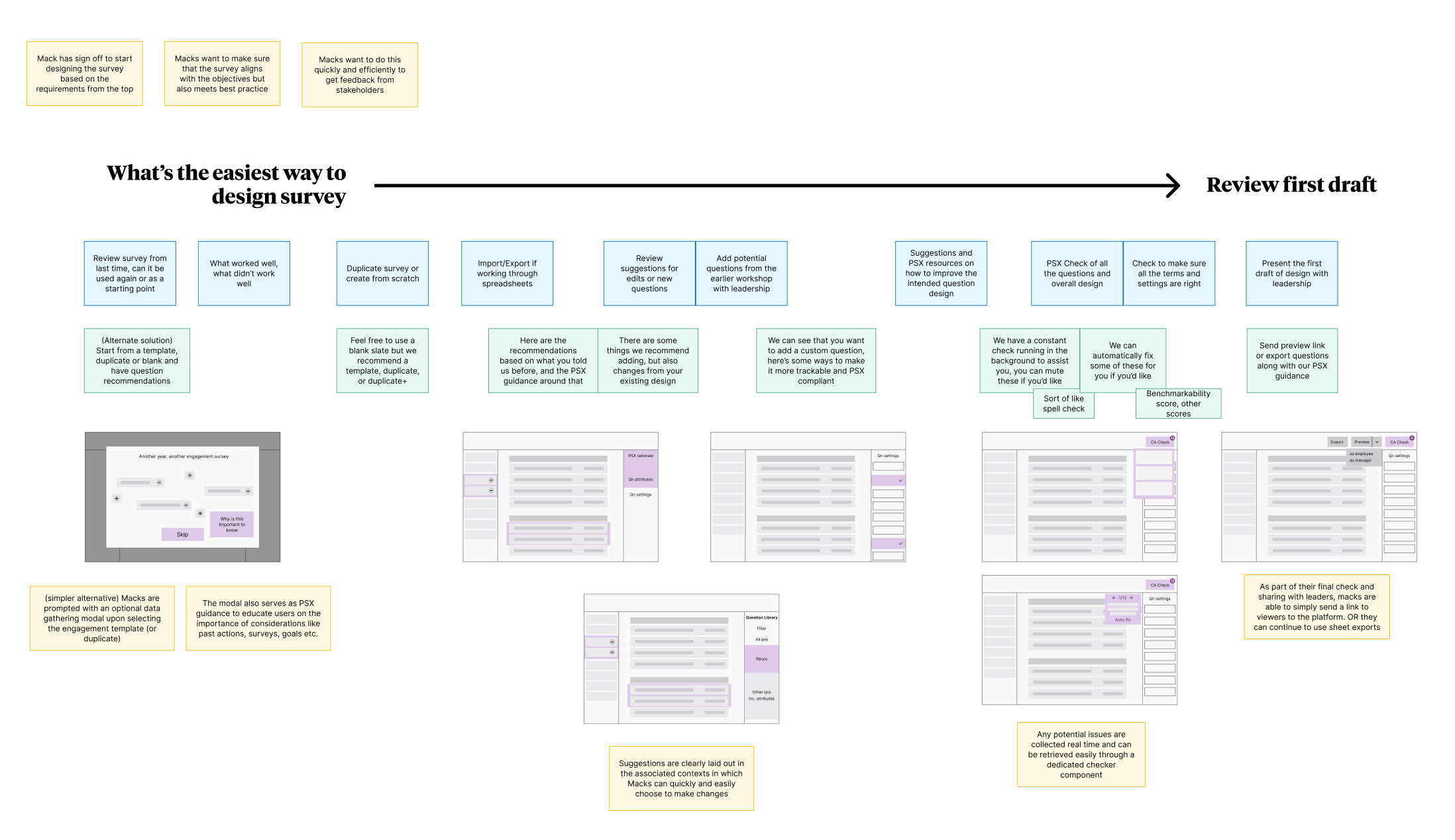
Exploring smarter workflows
We tested a number of concepts:
- More accessible question library within the Survey Designer
- Semantic linking between questions
- AI-assisted writing (autocomplete, recommendations)
- People Science guidance embedded and accessible in the workflow
I led testing using working AI prototypes (built with Claude), partnering closely with our People Scientists as SME to make sure outputs aligned with best practice. This helped us validate the UI and whether these AI-powered features actually helped speed up workflows and increase confidence for users.
Designing the foundation
In parallel we redesigned the core survey design experience. We landed on a multi-panel layout with:
- Clear separation between editing, settings, and preview
- Less of a “everything in one” UI
- More modular, easier to add/scale with new features
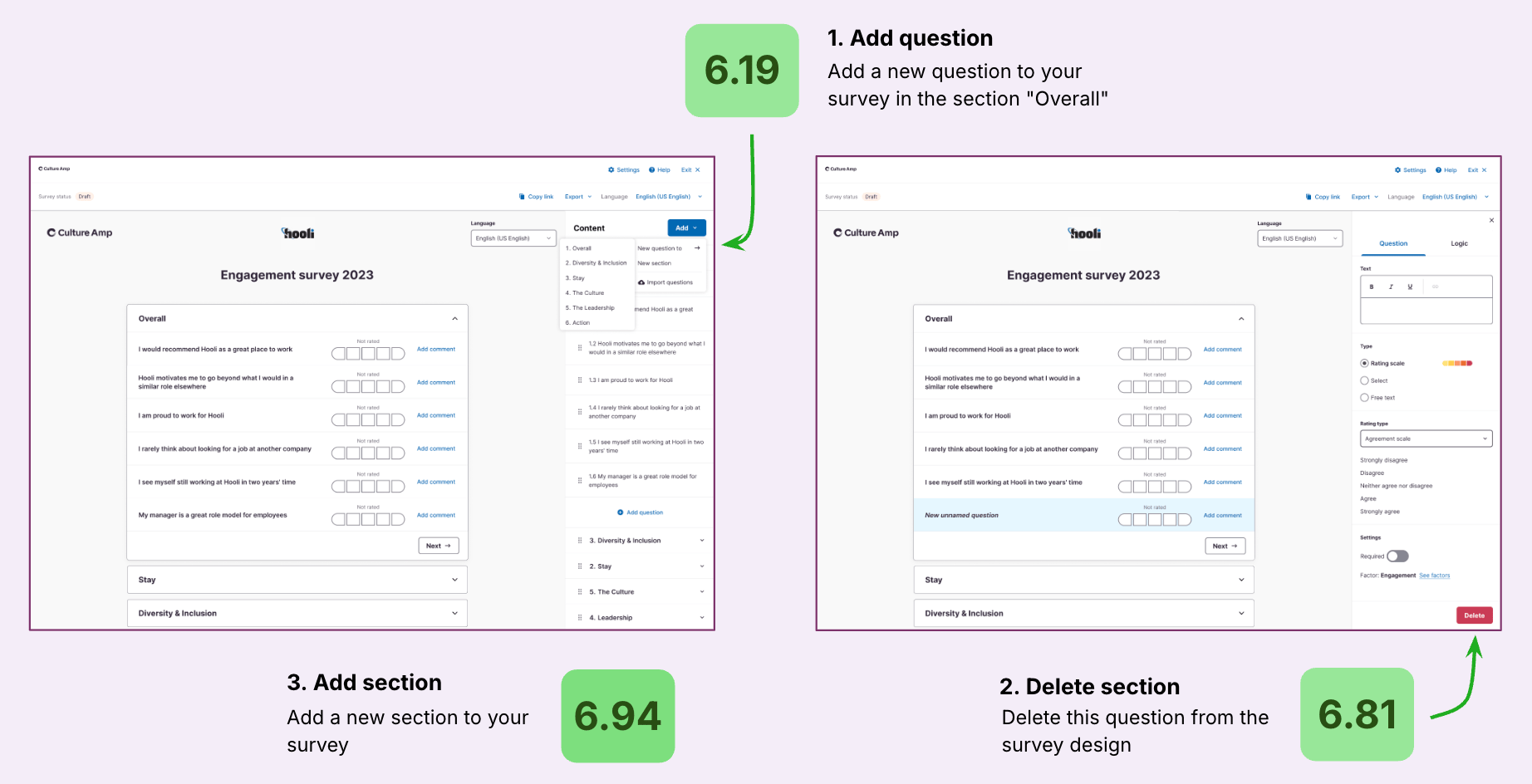
To validate the new experience I ran unmoderated Maze testing with 20 admins across different segments and regions with the goal to:
- Test existing workflows and learnability
- Assess against usability metrics like SUS (>80) and SEQ (>5.5)
Feedback came back positive, users liked being able to edit and preview at the same time. The structure felt familiar even though there was some learning curve there was expectation it would eventually be faster overall.
What changed as a result?
- Early Access release from Q1 2026
- 24% reduced newly created custom questions from the previous month
- Early figures show reduction in support tickets related to survey creation
- Future adoption of the survey builder as a shared pattern across multiple product areas
- Created a clearer foundation for new survey designer experiences