Back to home

Rethinking the Command Line for critical workflows

ENTERPRISE · PUBLIC SECTOR · DESKTOP APP

Summary

At Mark43 I led the redesign of the Command Line experience within our CAD platform, focusing on improving speed, usability, and consistency for dispatchers.

While command-based workflows are inherently powerful, they can be difficult to learn and prone to error. The challenge was to align an existing system with specialised workflows used by NSWPF, while maintaining compatibility across global customers.

Why was it important to redesign?

In emergency response workflows, speed is critical. While most interfaces rely on point-and-click interactions, dispatchers often prefer keyboard/shortcut driven workflows to execute actions quickly.

The existing command line system was powerful but difficult to learn due to inconsistent command structures and provided limited feedback when errors occured.

Understanding real-world conditions

To solve for this greenfield problem we had to first understand the existing workflow. We conducted:

  • Field research across NSW (urban and regional) and a number of agencies in the US
  • 1:1 interviews, ride-alongs, and workshops

Shaping the design direction

To solve for this greenfield problem we had to first understand the existing workflow. We conducted:

  • Field research across NSW (urban and regional) and a number of agencies in the US
  • 1:1 interviews, ride-alongs, and workshops

What was the result?

This feature was delivered on time and met both contractual and compliance requirements. It rolled out to multiple regions, including NSW and select US customers.

Measurable outcomes included a marginal (~2%) reduction in command line errors, and importantly the redesign established a more scalable foundation for future command-based interactions.

Want to learn more?

CV/Resume

Linkedin

Email

Back to home

Rethinking the Command Line for critical workflows

ENTERPRISE · PUBLIC SECTOR · DESKTOP APP

Summary

At Mark43 I led the redesign of the Command Line experience within our CAD platform, focusing on improving speed, usability, and consistency for dispatchers.

While command-based workflows are inherently powerful, they can be difficult to learn and prone to error. The challenge was to align an existing system with specialised workflows used by NSWPF, while maintaining compatibility across global customers.

Why was it important to redesign?

In emergency response workflows, speed is critical. While most interfaces rely on point-and-click interactions, dispatchers often prefer keyboard/shortcut driven workflows to execute actions quickly.

The existing command line system was powerful but difficult to learn due to inconsistent command structures and provided limited feedback when errors occured.

Understanding real-world conditions

To solve for this greenfield problem we had to first understand the existing workflow. We conducted:

  • Field research across NSW (urban and regional) and a number of agencies in the US
  • 1:1 interviews, ride-alongs, and workshops

Shaping the design direction

To solve for this greenfield problem we had to first understand the existing workflow. We conducted:

  • Field research across NSW (urban and regional) and a number of agencies in the US
  • 1:1 interviews, ride-alongs, and workshops

What was the result?

This feature was delivered on time and met both contractual and compliance requirements. It rolled out to multiple regions, including NSW and select US customers.

Measurable outcomes included a marginal (~2%) reduction in command line errors, and importantly the redesign established a more scalable foundation for future command-based interactions.

Want to learn more?

CV/Resume

Linkedin

Email

Back to home

Rethinking the Command Line for critical workflows

ENTERPRISE · PUBLIC SECTOR · DESKTOP APP
Summary

At Mark43 I led the redesign of the Command Line experience within our CAD platform, focusing on improving speed, usability, and consistency for dispatchers.

While command-based workflows are inherently powerful, they can be difficult to learn and prone to error. The challenge was to align an existing system with specialised workflows used by NSWPF, while maintaining compatibility across global customers.
Why was it important to redesign?

In emergency response workflows, speed is critical. While most interfaces rely on point-and-click interactions, dispatchers often prefer keyboard/shortcut driven workflows to execute actions quickly.

The existing command line system was powerful but difficult to learn due to inconsistent command structures and provided limited feedback when errors occured.
Understanding real-world conditions

I led the research initiative with NSW Police, alongside parallel work with the US and UK teams. We focused on understanding:

  • When and why command line interactions were used
  • How users learn and remember commands and,
  • Where existing workflows break down

From the 2 months of discovery we found that:

  • Users relied on muscle memory and repetition
  • Training complexity was a major barrier to adoption
  • Much of the existing commands were fragmented and inconsistent

Shaping the design direction

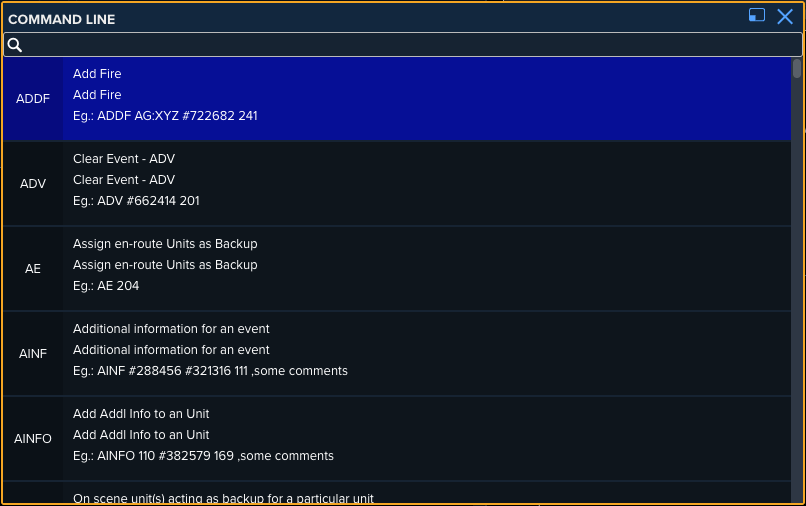
  • Improving discoverability - to reduce reliance on memory, we introduced a simple HELP command that allows users to quickly view available commands
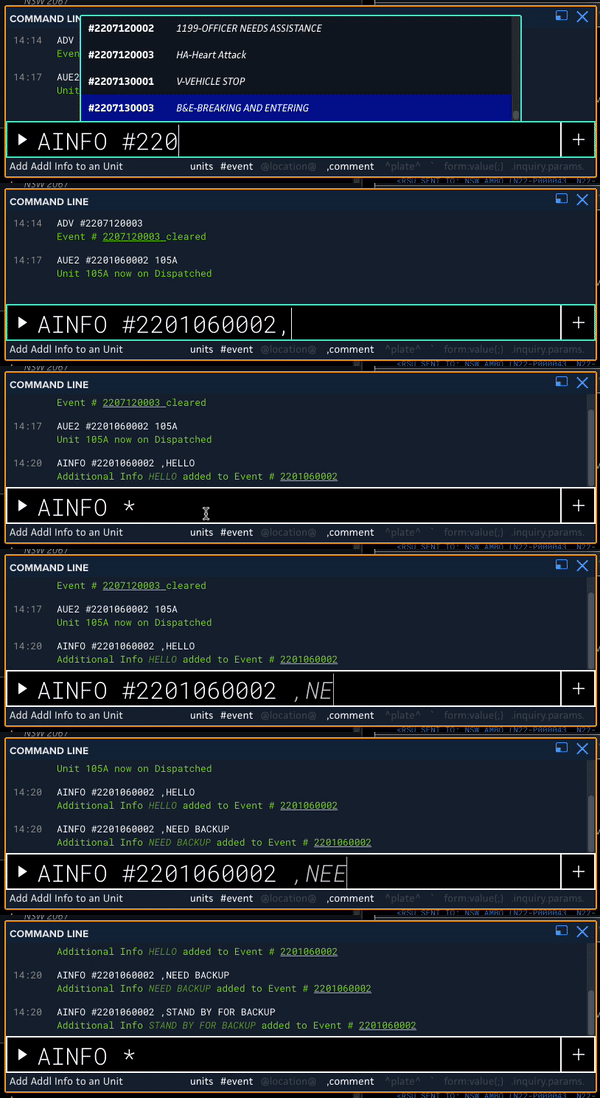
  • Designing for error prevention and recovery - errors in command-based system can have serious consequences so we introduced clearer error states and feedback
  • Supporting configurability across regions - workflows can differ significantly across regions and states so we designed a system to support configurable commands
  • System-wide consistency – because the command line interacts with many parts of the CAD system, changes needed to be coordinated across teams

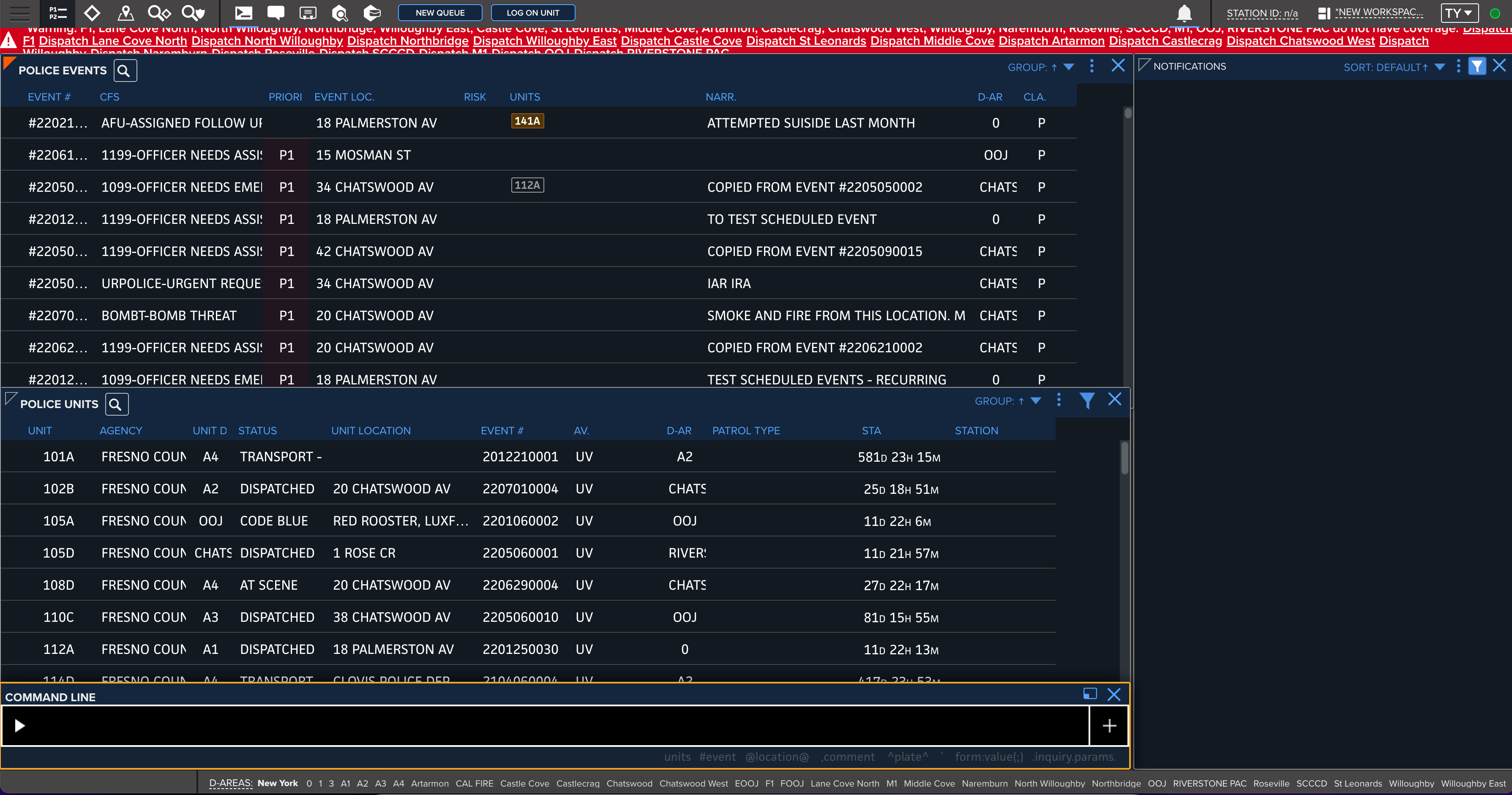
In terms of interaction design, the command line was positioned at the bottom of the app window, aligning with common usage patterns in keeping the primary workspace clear.

What was the result?

This feature was delivered on time and met both contractual and compliance requirements. It rolled out to multiple regions, including NSW and select US customers.

Measurable outcomes included a marginal (~2%) reduction in command line errors, and importantly the redesign established a more scalable foundation for future command-based interactions.