Building a Marketplace and Booking platform

CONSUMER · MOBILE · RESPONSIVE WEB

Summary

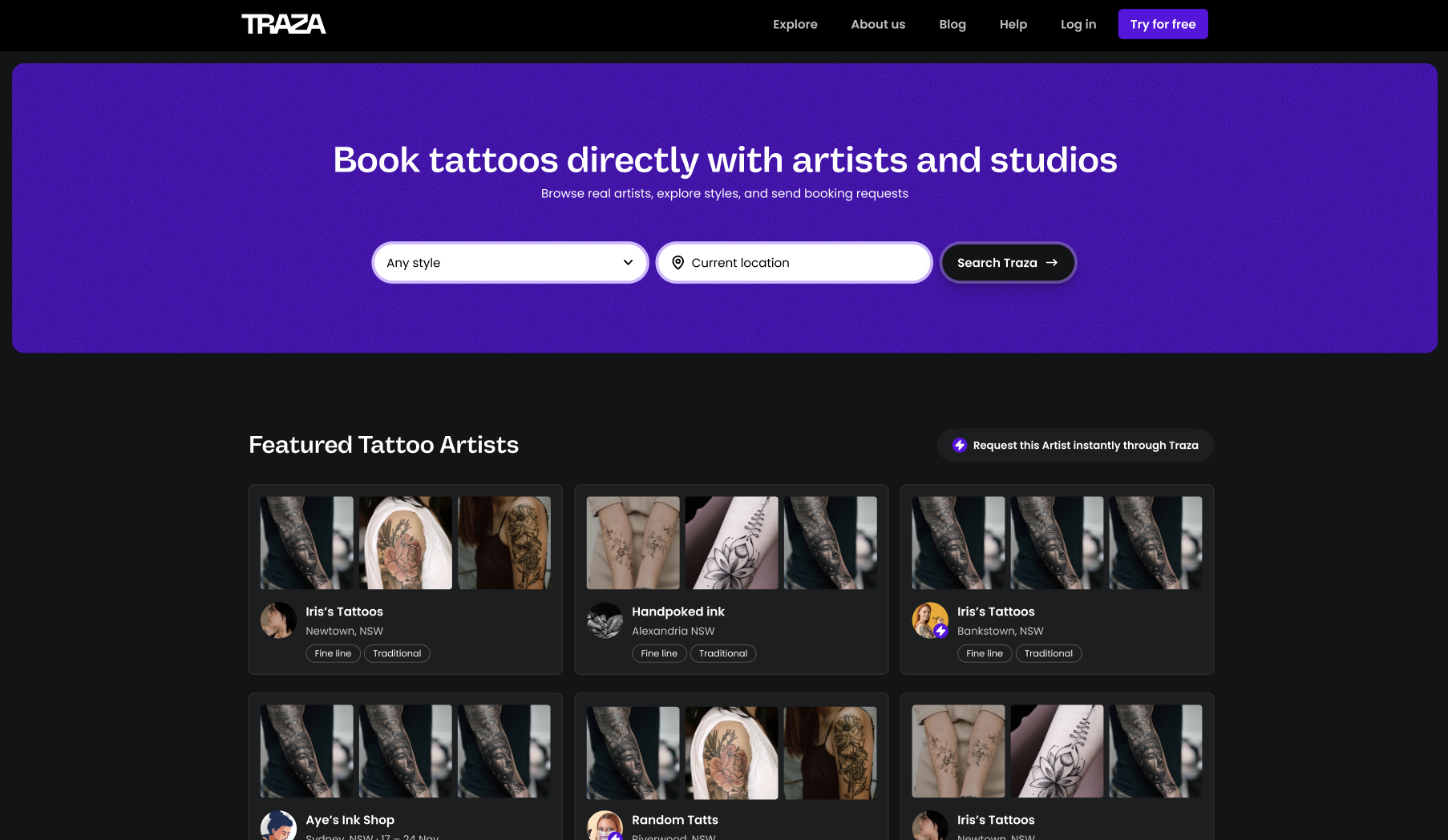
TRAZA is a two-sided marketplace and booking platform built to streamline how tattoo clients discover artists and how artists manage bookings.

As co-founder and head of product and design, I led the end-to-end product from 0→1, defining the marketplace strategy, designing both sides of the platform, and working with CTO and engineers to ship and iterate on the MVP.

We focused on solving supply-side pain points while building towards a scalable marketplace, an approach that enabled rapid early traction, with 250+ artists onboarded and growing booking activity across the platform.
What problem were we trying to solve?

Tattoo booking today is surprisingly fragmented. Most clients discover artists through Instagram, then move into DMs to figure out availability, share references, and try to lock in a booking. This process is slow, inconsistent, and often leads to drop-off

On the other side, artists are juggling:

  • DMs across multiple platforms (Instagram/socials, emails, google forms)
  • Notes or spreadsheets to track requests
  • Manual back-and-forth to quality, schedule, and remind clients of bookings

Discovery itself is also limited. Clients can’t easily search or filter through Instagram or Google Search, which makes finding the right artists unnecessarily difficult.
How might we make tattoo booking seamless for both sides?

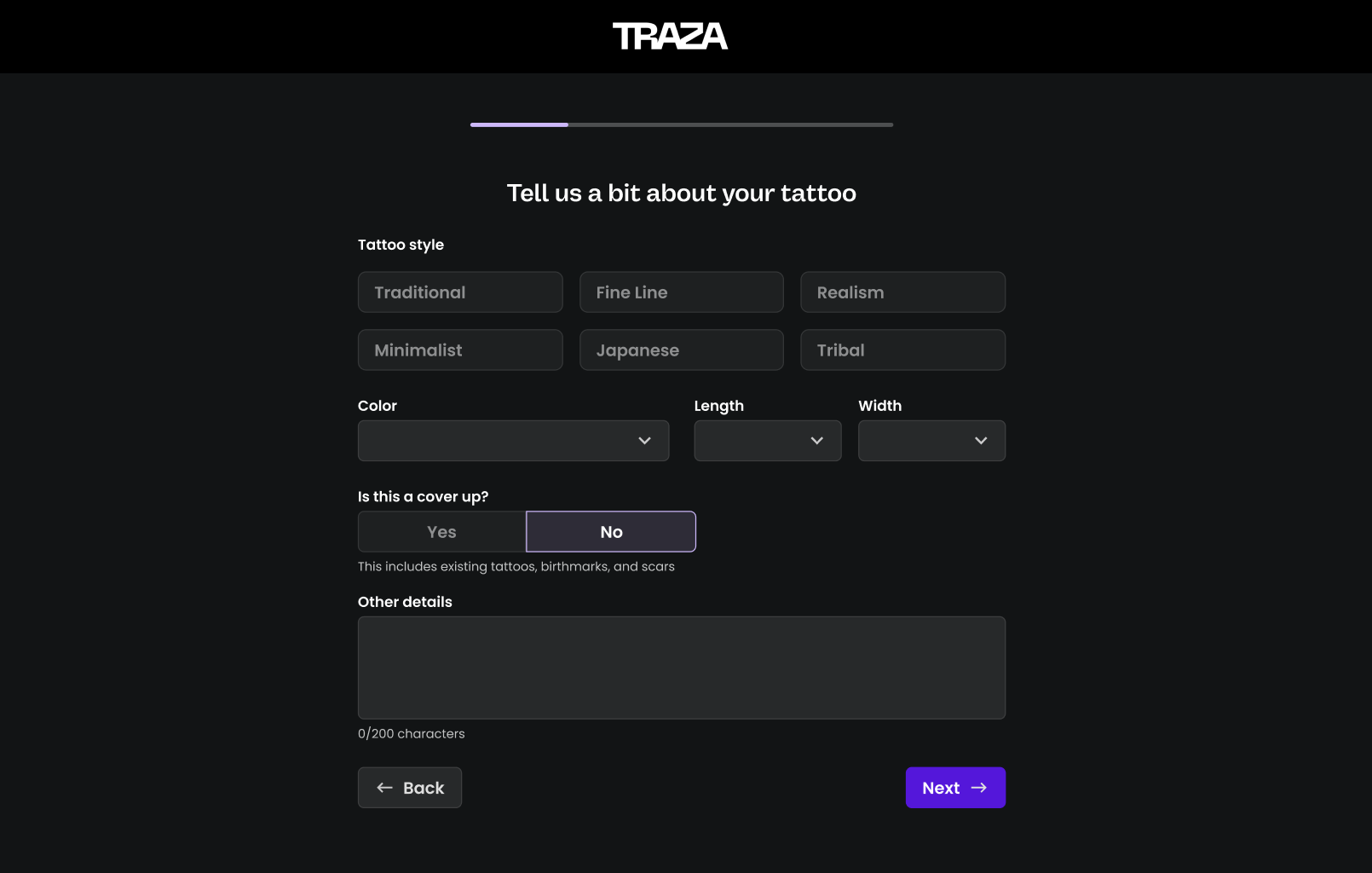
What sets us apart from generic booking tools is focusing on designing the marketplace workflow based on the realities of the tattoo industry. Tattoo bookings are often:

  • Either flash (pre-designed) or custom work
  • Single or multiple sessions (potentially 8+ sessions)
  • Dependent on artist location availability and approval
  • Lots of back and forth consultation/clarification

Early on we also made the decision that TRAZA wouldn’t just be a marketplace, it would also provide tools for artists to manage their bookings. Artists can:

  • Use TRAZA purely for discovery and create a free profile
  • Or adopt a full booking management workflow

This allowed us to reduce friction for onboarding the supply-side while building towards a sustainable business model.
Designing a system across mobile and web

Clients primarily discover and browse on mobile, while artists often manage bookings across mobile and desktop. This meant that the experience we were designing needed to feel consistent, while still adapting to different contexts and behaviours.

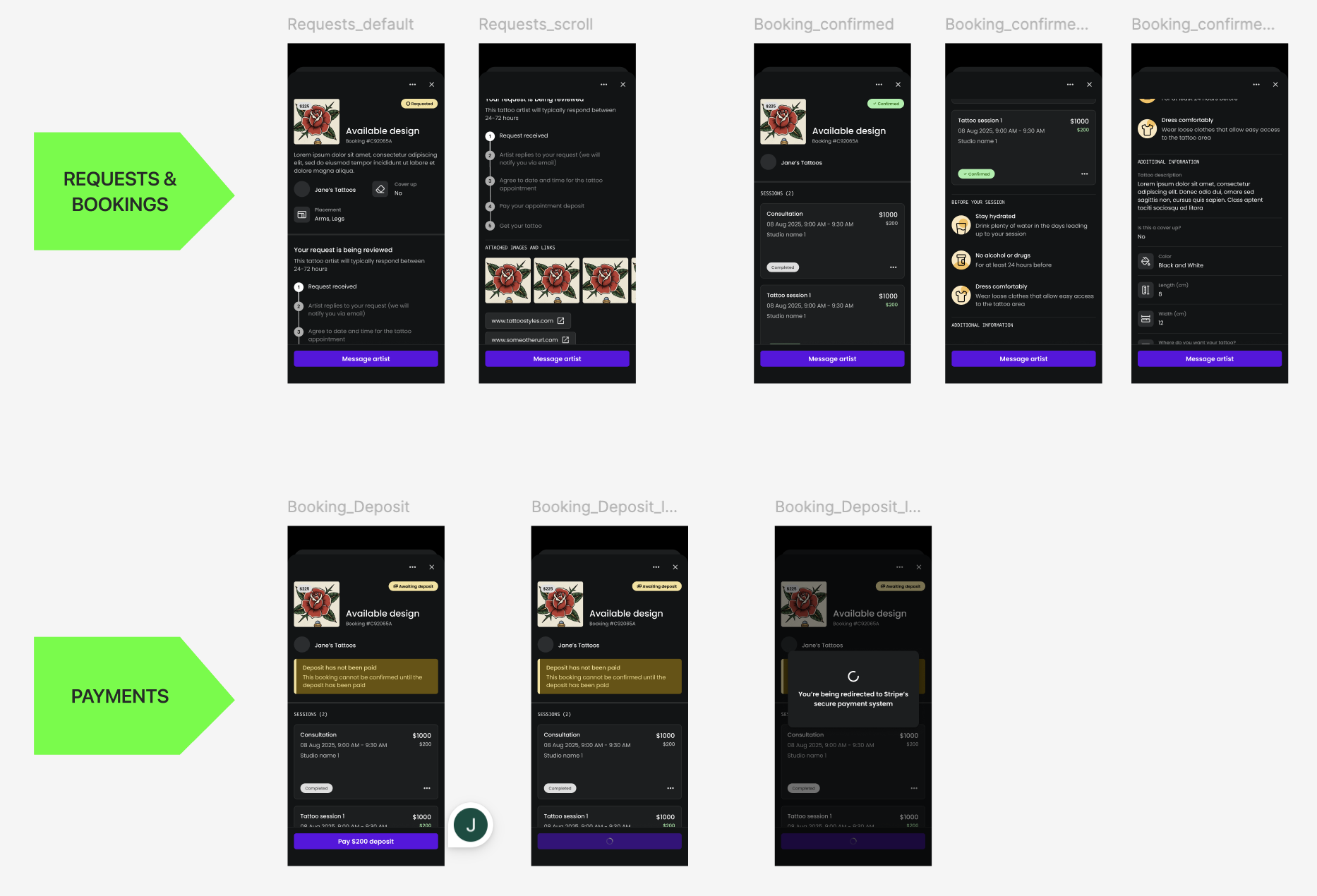
This led to decisions around the design system to focus on lightweight, scrollable feeds, and progressive disclosure of content to avoid overwhelming users (e.g. booking forms, onboarding).

To keep everything consistent, I set up a lightweight design system that could scale across both platforms which included reusable component for core flows (requests, bookings, messaging) and consistent patterns for statuses, notifications.
Iterating with real users

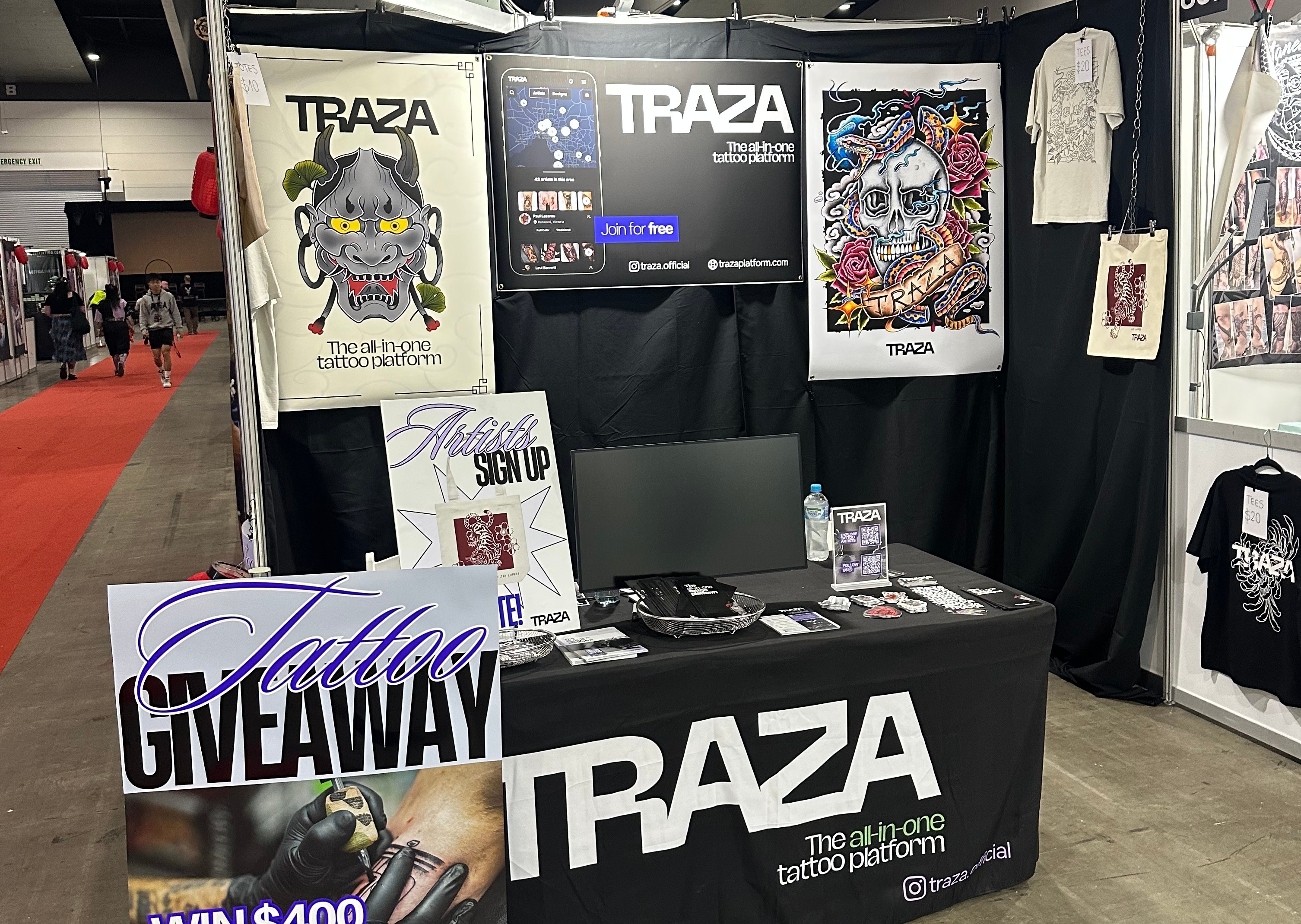
We worked closely with artists from day one through direct outreach, expos, social media etc. Instead of relying purely on rigorous research processes out approach revolved around:

  • Shipping and iterating quickly
  • Analysis of product analytics and focusing on what improved conversion
  • Curating a small team of engaged artists to help us understand their needs

Growth and impact

Since launch we’ve seen strong early signals on the supply-side with over 250+ tattoo artists in Australia onboarded.

  • Growing client base (+200% monthly active users)
  • Increasing engagement with artist profiles and booking requests (+89% from the previous month)
  • We’re starting to see more artists moving onto our booking platform and healthy retention (>90% to date)

Want to learn more?

CV/Resume

Linkedin

Email

Building a Marketplace and Booking platform

CONSUMER · MOBILE · RESPONSIVE WEB

Summary

TRAZA is a two-sided marketplace and booking platform built to streamline how tattoo clients discover artists and how artists manage bookings.

As co-founder and head of product and design, I led the end-to-end product from 0→1, defining the marketplace strategy, designing both sides of the platform, and working with CTO and engineers to ship and iterate on the MVP.

We focused on solving supply-side pain points while building towards a scalable marketplace, an approach that enabled rapid early traction, with 250+ artists onboarded and growing booking activity across the platform.

What problem were we trying to solve?

Tattoo booking today is surprisingly fragmented. Most clients discover artists through Instagram, then move into DMs to figure out availability, share references, and try to lock in a booking. This process is slow, inconsistent, and often leads to drop-off

On the other side, artists are juggling:

  • DMs across multiple platforms (Instagram/socials, emails, google forms)
  • Notes or spreadsheets to track requests
  • Manual back-and-forth to quality, schedule, and remind clients of bookings

Discovery itself is also limited. Clients can’t easily search or filter through Instagram or Google Search, which makes finding the right artists unnecessarily difficult.

How might we make tattoo booking seamless for both sides?

What sets us apart from generic booking tools is focusing on designing the marketplace workflow based on the realities of the tattoo industry. Tattoo bookings are often:

  • Either flash (pre-designed) or custom work
  • Single or multiple sessions (potentially 8+ sessions)
  • Dependent on artist location availability and approval
  • Lots of back and forth consultation/clarification

Early on we also made the decision that TRAZA wouldn’t just be a marketplace, it would also provide tools for artists to manage their bookings. Artists can:

  • Use TRAZA purely for discovery and create a free profile
  • Or adopt a full booking management workflow

This allowed us to reduce friction for onboarding the supply-side while building towards a sustainable business model.

Designing a system across mobile and web

Clients primarily discover and browse on mobile, while artists often manage bookings across mobile and desktop. This meant that the experience we were designing needed to feel consistent, while still adapting to different contexts and behaviours.

This led to decisions around the design system to focus on lightweight, scrollable feeds, and progressive disclosure of content to avoid overwhelming users (e.g. booking forms, onboarding).

To keep everything consistent, I set up a lightweight design system that could scale across both platforms which included reusable component for core flows (requests, bookings, messaging) and consistent patterns for statuses, notifications.

Iterating with real users

We worked closely with artists from day one through direct outreach, expos, social media etc. Instead of relying purely on rigorous research processes out approach revolved around:

  • Shipping and iterating quickly
  • Analysis of product analytics and focusing on what improved conversion
  • Curating a small team of engaged artists to help us understand their needs

Growth and impact

Since launch we’ve seen strong early signals on the supply-side with over 250+ tattoo artists in Australia onboarded.

  • Growing client base (+200% monthly active users)
  • Increasing engagement with artist profiles and booking requests (+89% from the previous month)
  • We’re starting to see more artists moving onto our booking platform and healthy retention (>90% to date)

Want to learn more?

CV/Resume

Linkedin

Email

Building a Marketplace and Booking platform

CONSUMER · MOBILE · RESPONSIVE WEB

Summary

TRAZA is a two-sided marketplace and booking platform built to streamline how tattoo clients discover artists and how artists manage bookings.

As co-founder and head of product and design, I led the end-to-end product from 0→1, defining the marketplace strategy, designing both sides of the platform, and working with CTO and engineers to ship and iterate on the MVP.

We focused on solving supply-side pain points while building towards a scalable marketplace, an approach that enabled rapid early traction, with 250+ artists onboarded and growing booking activity across the platform.

What problem were we trying to solve?

Tattoo booking today is surprisingly fragmented. Most clients discover artists through Instagram, then move into DMs to figure out availability, share references, and try to lock in a booking. This process is slow, inconsistent, and often leads to drop-off

On the other side, artists are juggling:

  • DMs across multiple platforms (Instagram/socials, emails, google forms)
  • Notes or spreadsheets to track requests
  • Manual back-and-forth to quality, schedule, and remind clients of bookings

Discovery itself is also limited. Clients can’t easily search or filter through Instagram or Google Search, which makes finding the right artists unnecessarily difficult.

How might we make tattoo booking seamless for both sides?

What sets us apart from generic booking tools is focusing on designing the marketplace workflow based on the realities of the tattoo industry. Tattoo bookings are often:

  • Either flash (pre-designed) or custom work
  • Single or multiple sessions (potentially 8+ sessions)
  • Dependent on artist location availability and approval
  • Lots of back and forth consultation/clarification

Early on we also made the decision that TRAZA wouldn’t just be a marketplace, it would also provide tools for artists to manage their bookings. Artists can:

  • Use TRAZA purely for discovery and create a free profile
  • Or adopt a full booking management workflow

This allowed us to reduce friction for onboarding the supply-side while building towards a sustainable business model.

Designing a system across mobile and web

Clients primarily discover and browse on mobile, while artists often manage bookings across mobile and desktop. This meant that the experience we were designing needed to feel consistent, while still adapting to different contexts and behaviours.

This led to decisions around the design system to focus on lightweight, scrollable feeds, and progressive disclosure of content to avoid overwhelming users (e.g. booking forms, onboarding).

To keep everything consistent, I set up a lightweight design system that could scale across both platforms which included reusable component for core flows (requests, bookings, messaging) and consistent patterns for statuses, notifications.

Iterating with real users

We worked closely with artists from day one through direct outreach, expos, social media etc. Instead of relying purely on rigorous research processes out approach revolved around:

  • Shipping and iterating quickly
  • Analysis of product analytics and focusing on what improved conversion
  • Curating a small team of engaged artists to help us understand their needs

Growth and impact

Since launch we’ve seen strong early signals on the supply-side with over 250+ tattoo artists in Australia onboarded.

  • Growing client base (+200% monthly active users)
  • Increasing engagement with artist profiles and booking requests (+89% from the previous month)
  • We’re starting to see more artists moving onto our booking platform and healthy retention (>90% to date)